
.28 Antique Deco Diamond Filigree Engagement Ring 18k
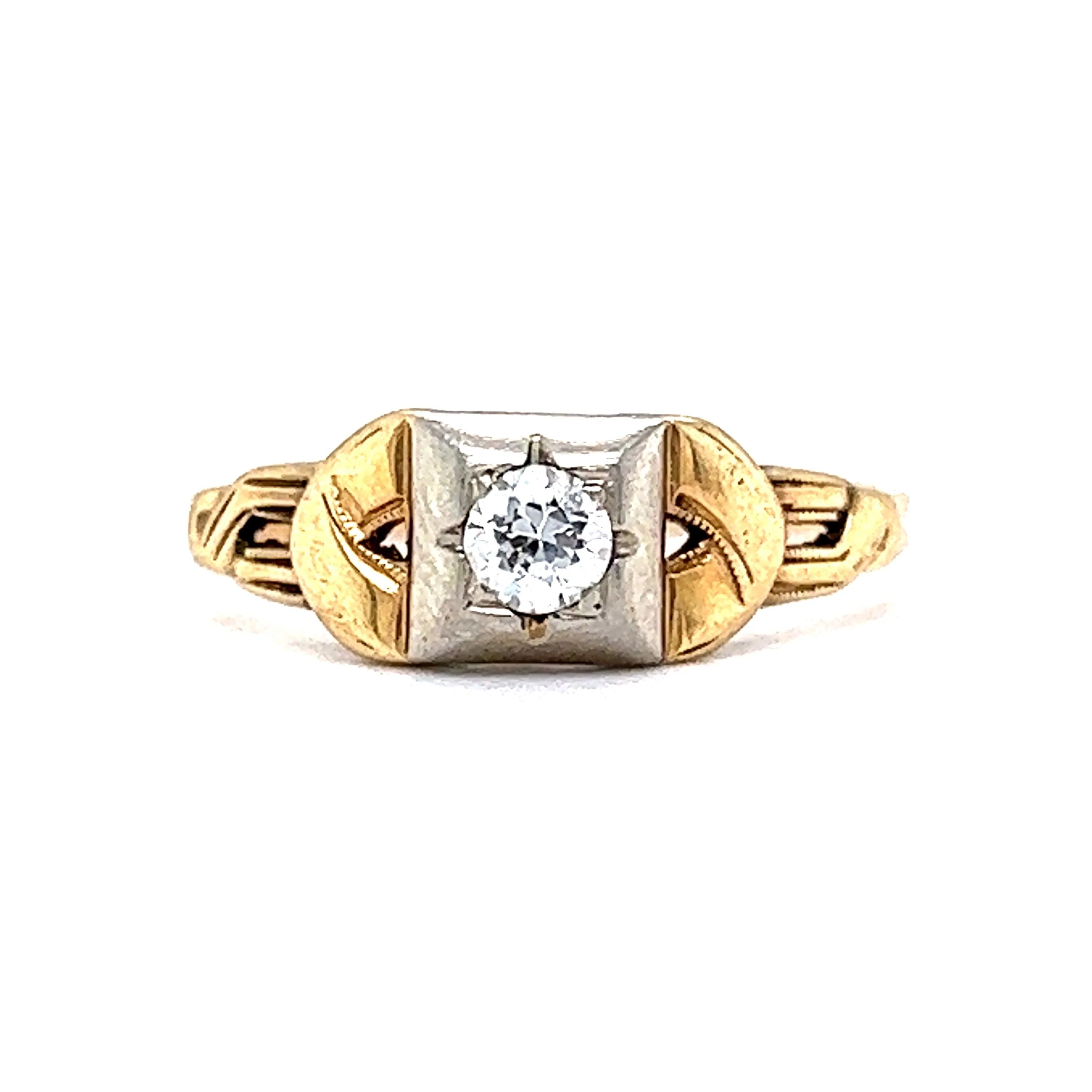
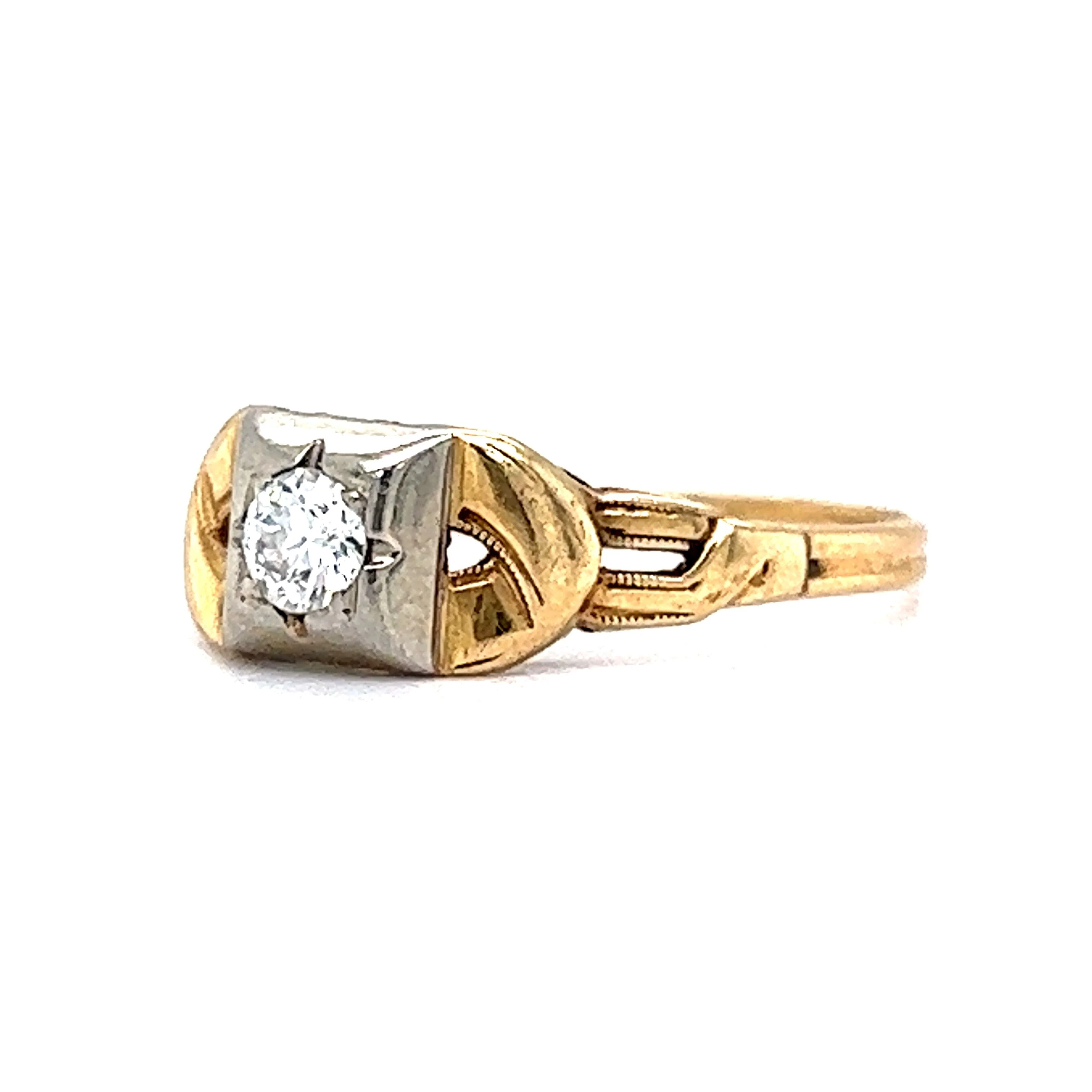
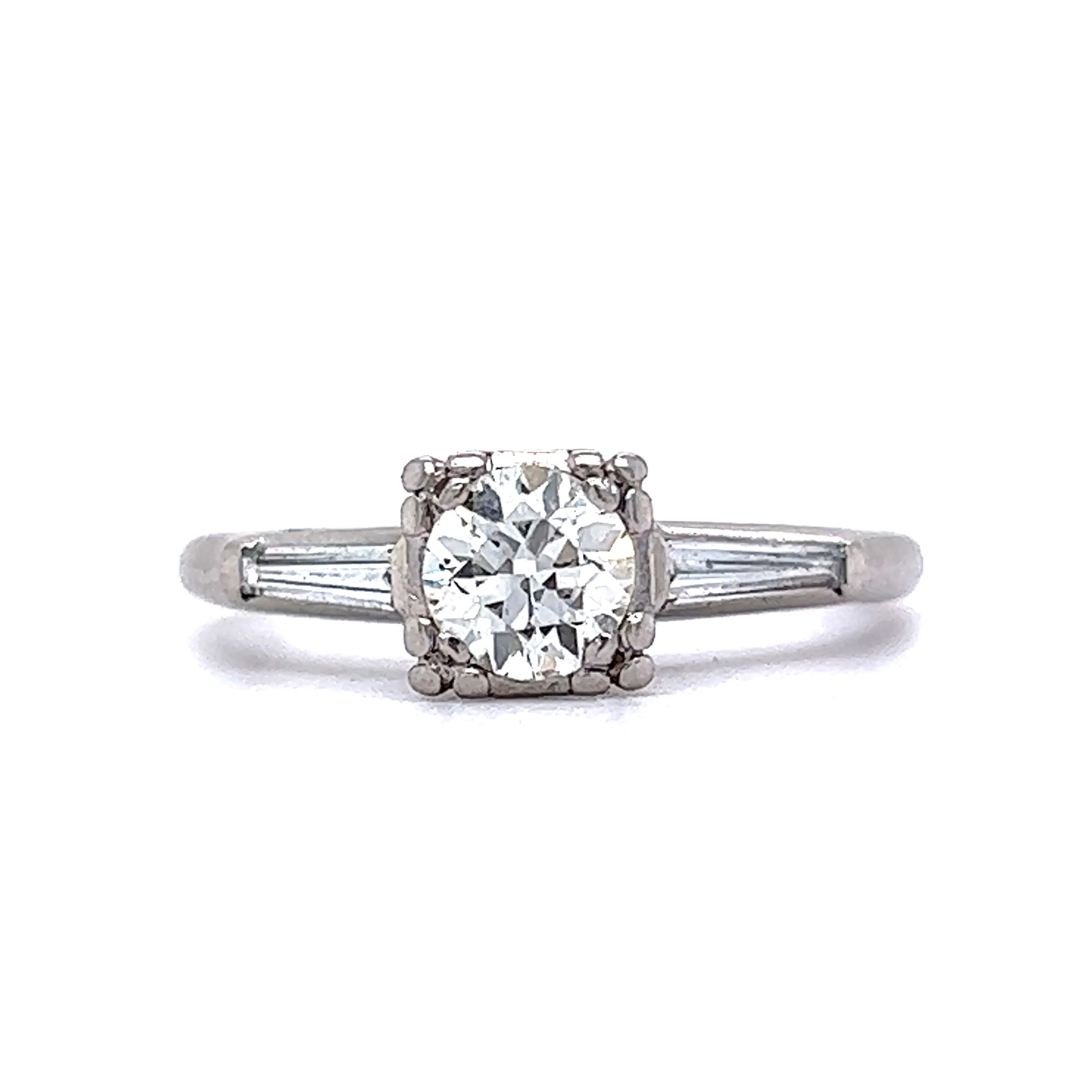
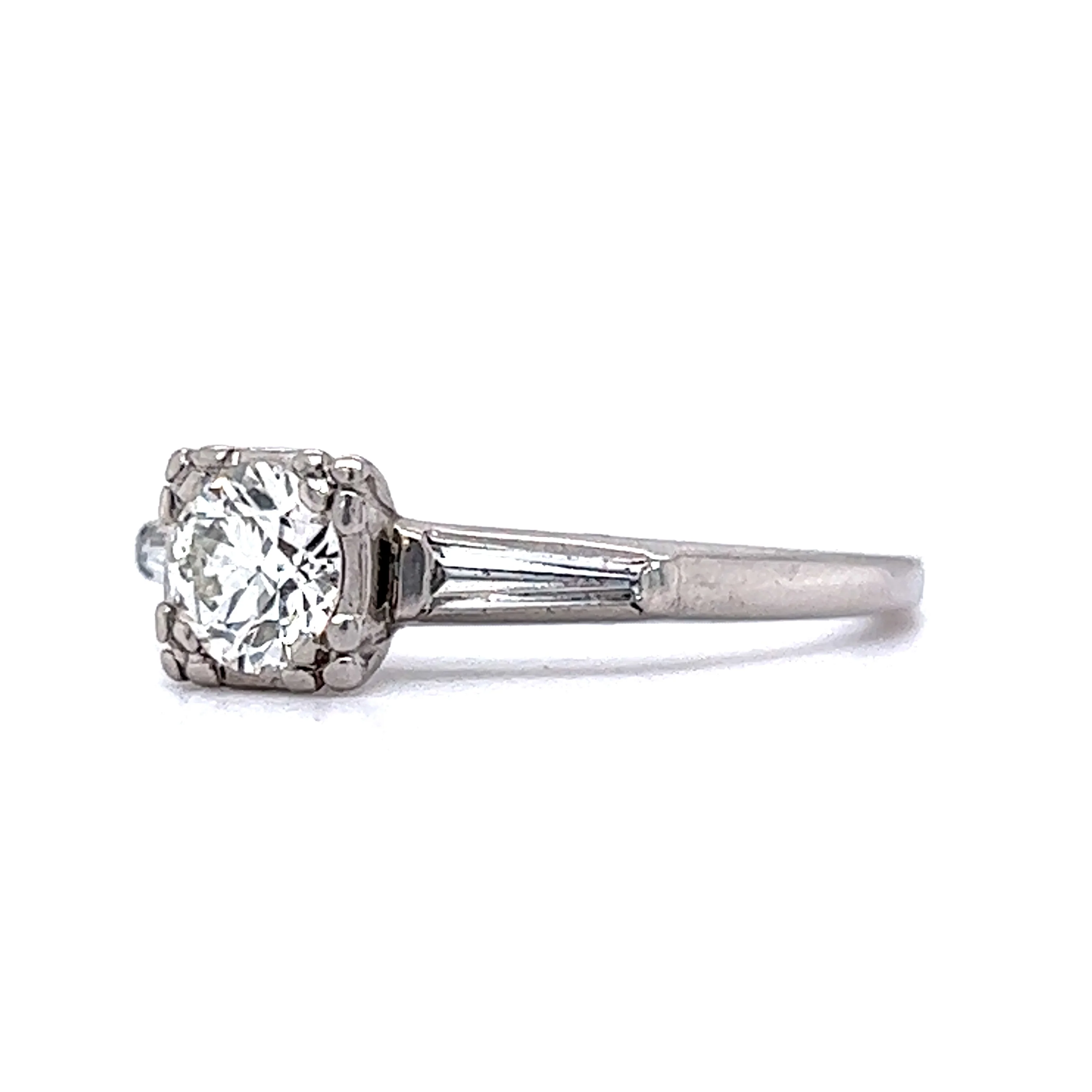
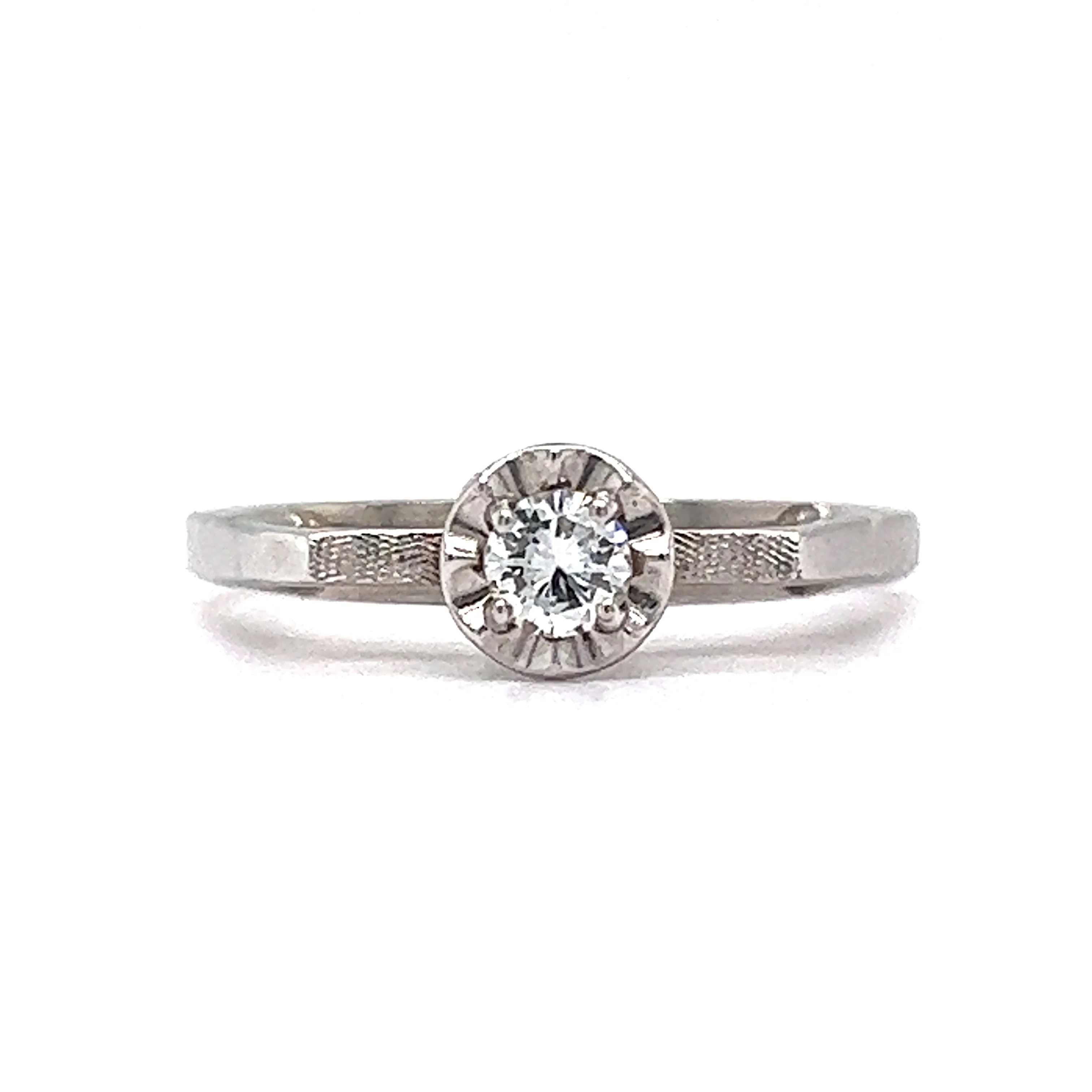
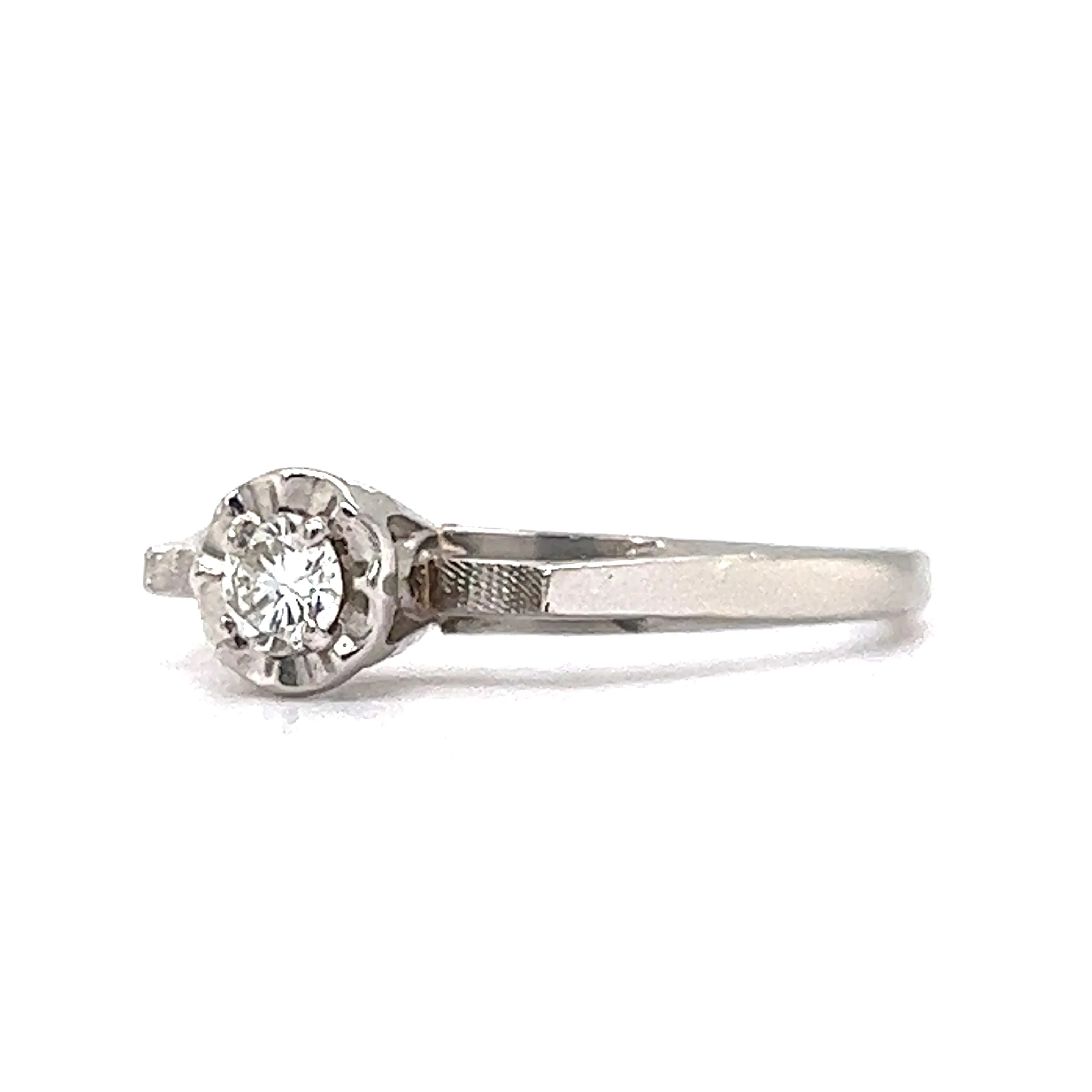
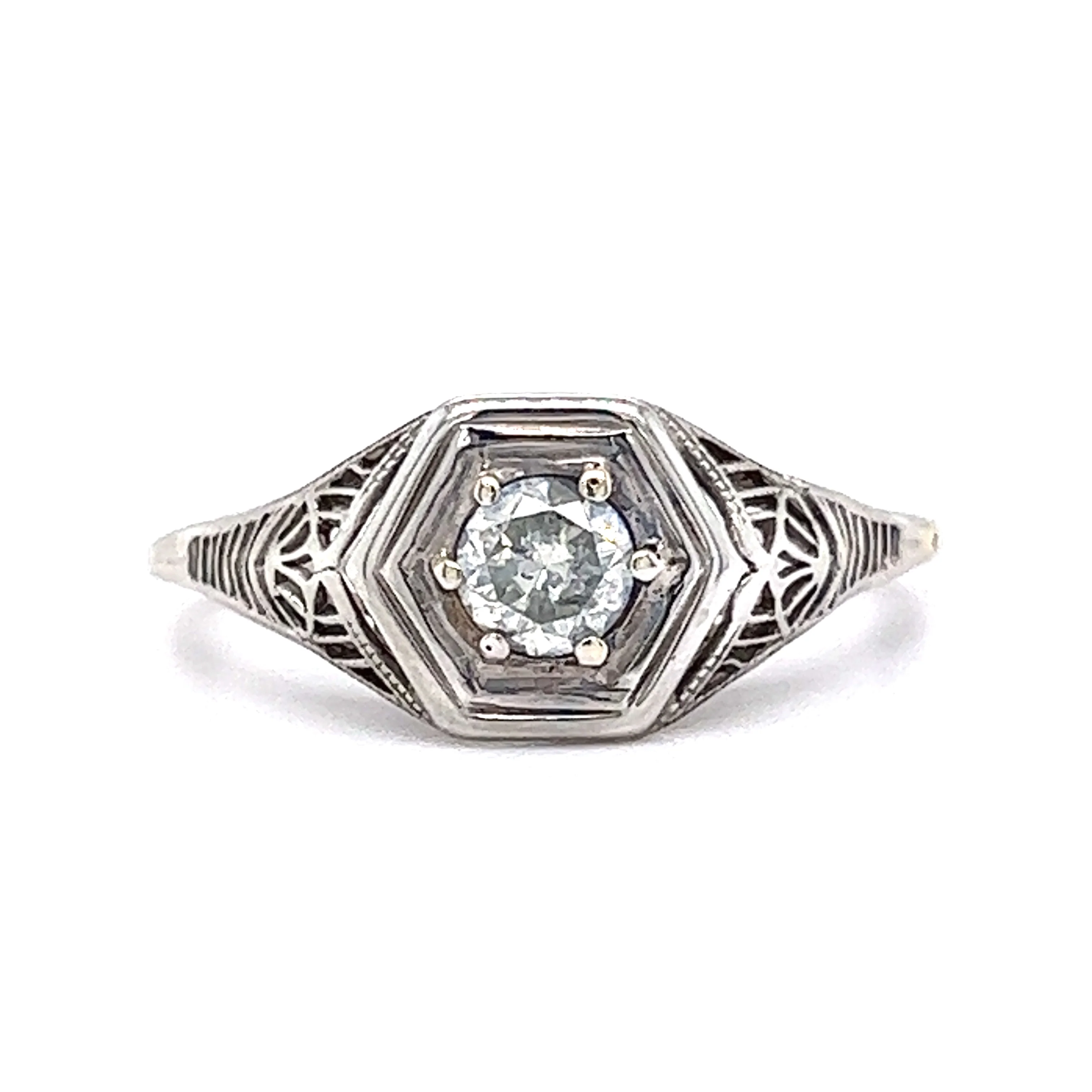
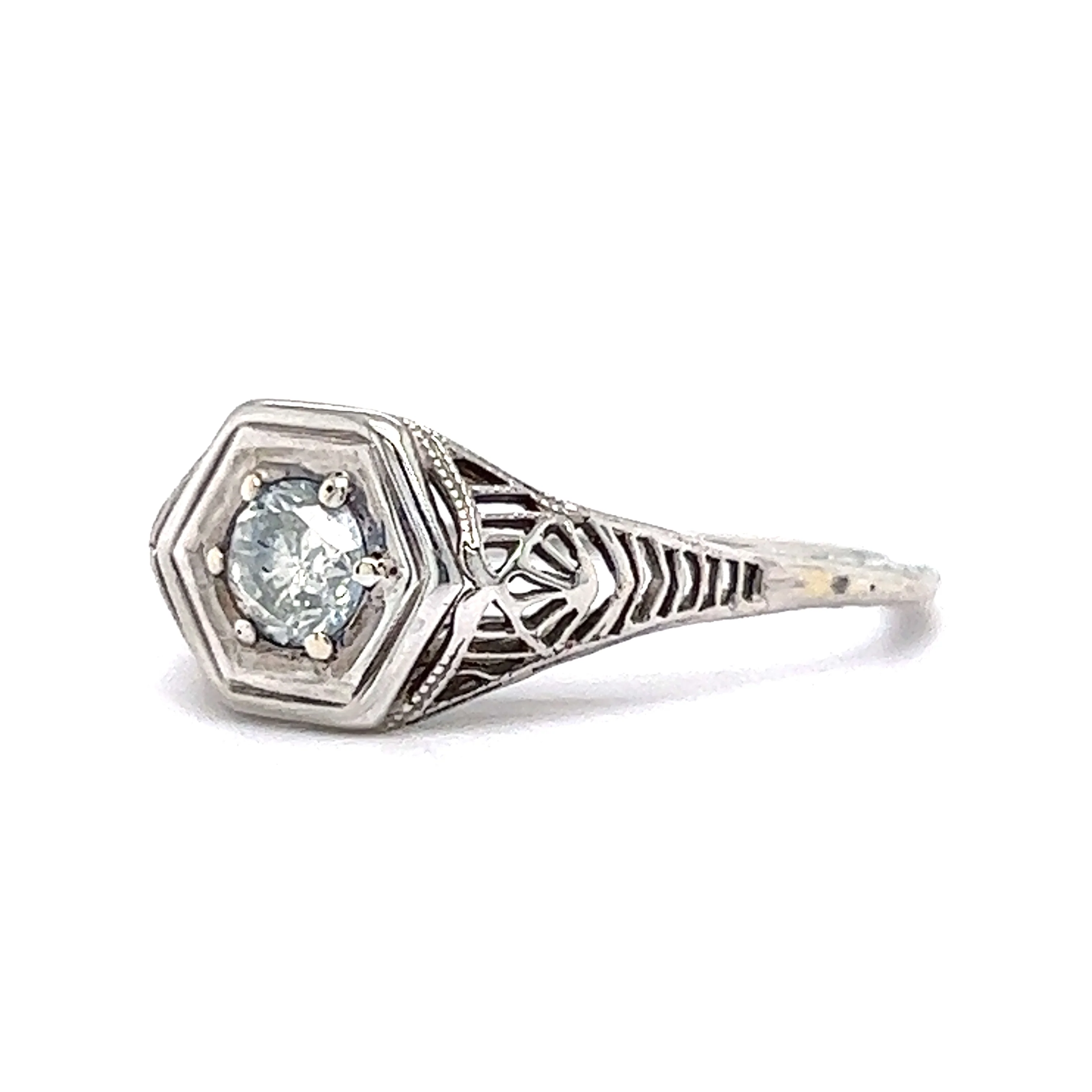
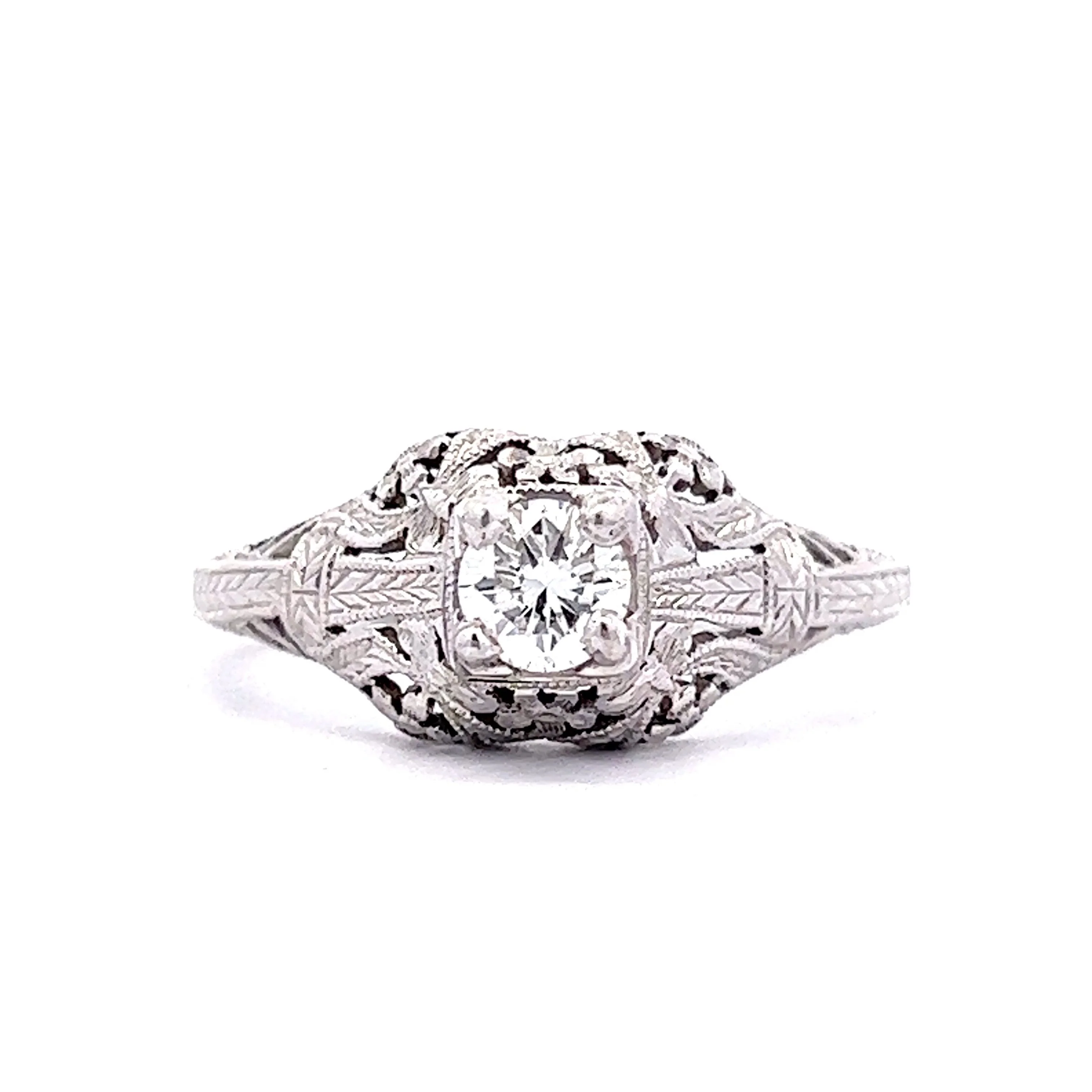
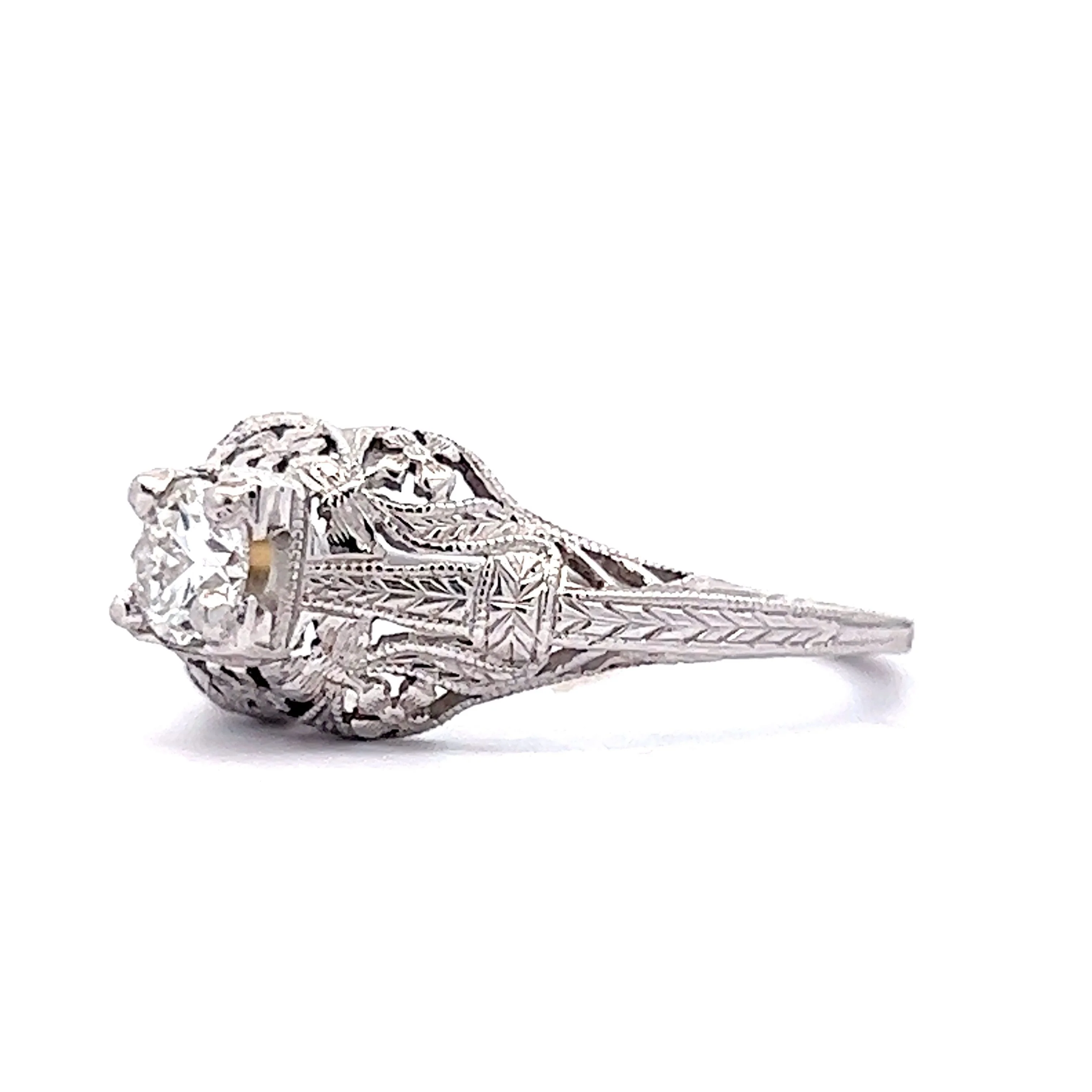
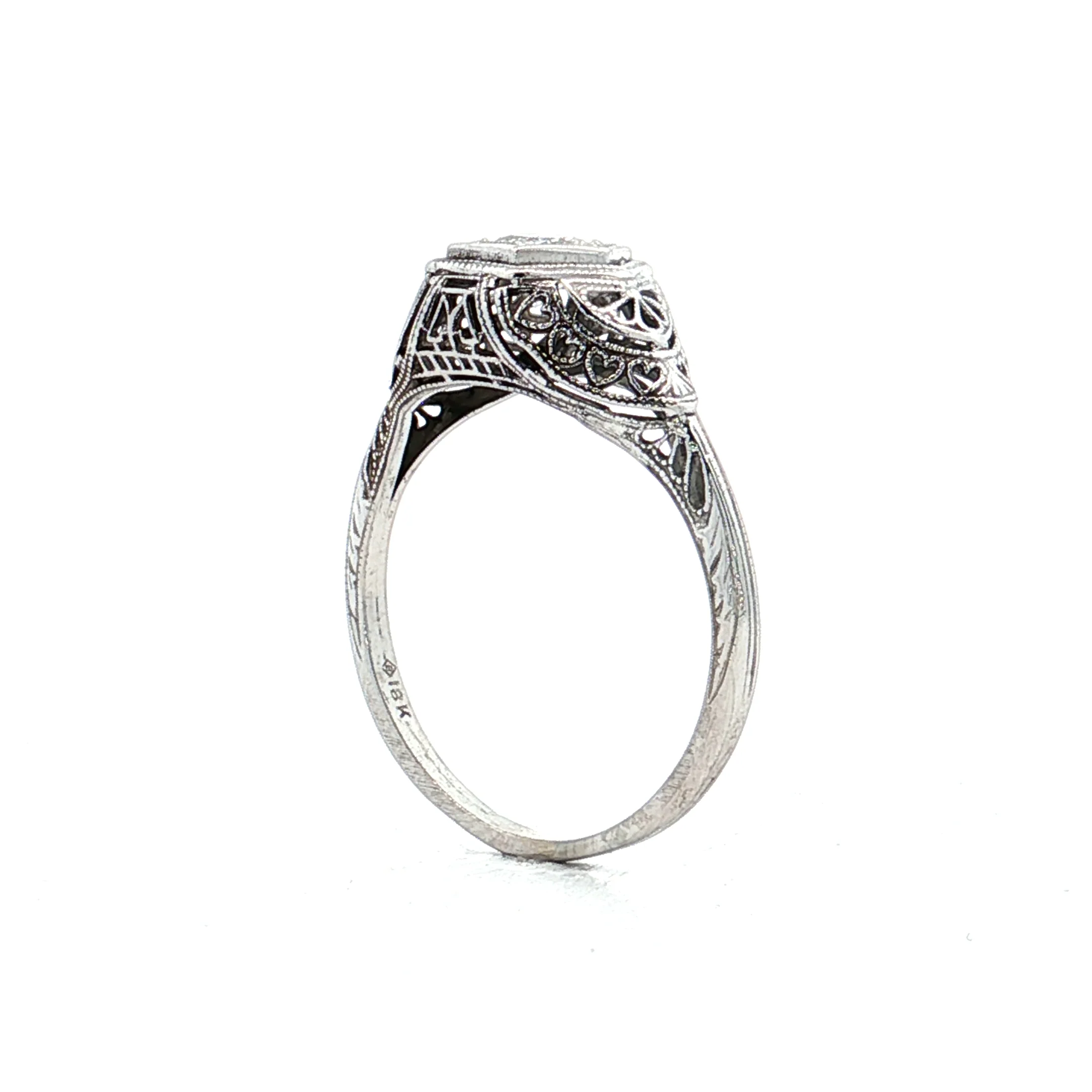
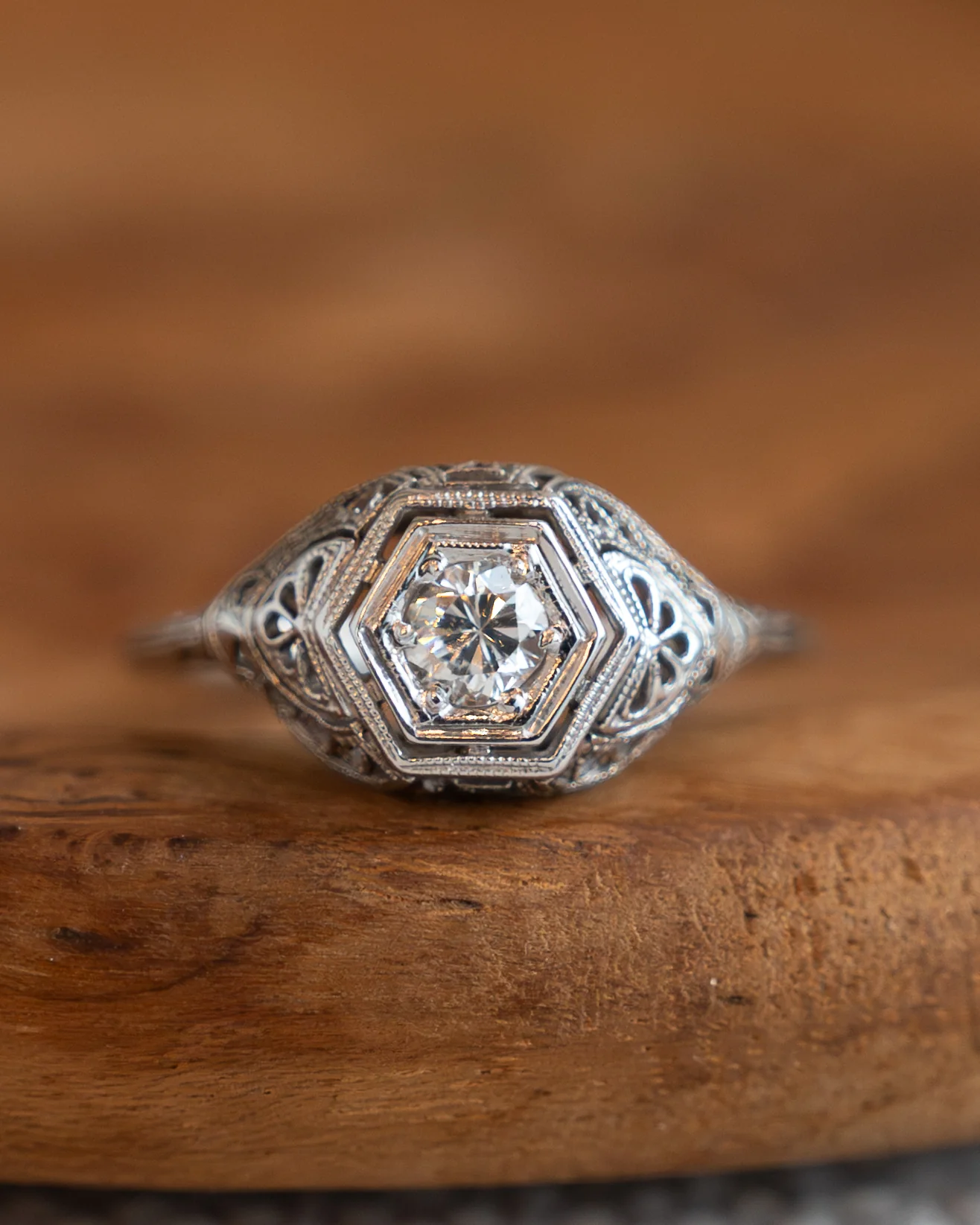
This Art Deco solitaire engagement ring features a .28 carat old European cut diamond in a hexagon-shaped head with 18K white gold. The diamond grades SI2 in clarity and I in color. Old European cuts from this period have a smaller table, higher crown, and larger culet than modern brilliants, creating chunkier facets that produce romantic flashes of light.
The scalloped filigree mounting features delicate openwork metalwork typical of Art Deco design, while milgrain beading adds texture along the edges. The hexagon-shaped head frames the diamond geometrically, reflecting the angular aesthetic popular in 1920s and 1930s.
Original: $2,475.00
-65%$2,475.00
$866.25More Images



.28 Antique Deco Diamond Filigree Engagement Ring 18k
This Art Deco solitaire engagement ring features a .28 carat old European cut diamond in a hexagon-shaped head with 18K white gold. The diamond grades SI2 in clarity and I in color. Old European cuts from this period have a smaller table, higher crown, and larger culet than modern brilliants, creating chunkier facets that produce romantic flashes of light.
The scalloped filigree mounting features delicate openwork metalwork typical of Art Deco design, while milgrain beading adds texture along the edges. The hexagon-shaped head frames the diamond geometrically, reflecting the angular aesthetic popular in 1920s and 1930s.
Product Information
Product Information
Shipping & Returns
Shipping & Returns
Description
This Art Deco solitaire engagement ring features a .28 carat old European cut diamond in a hexagon-shaped head with 18K white gold. The diamond grades SI2 in clarity and I in color. Old European cuts from this period have a smaller table, higher crown, and larger culet than modern brilliants, creating chunkier facets that produce romantic flashes of light.
The scalloped filigree mounting features delicate openwork metalwork typical of Art Deco design, while milgrain beading adds texture along the edges. The hexagon-shaped head frames the diamond geometrically, reflecting the angular aesthetic popular in 1920s and 1930s.